Hey there! If you’re here, you’re either a small box shop owner grabbing a used corrugated box machine to scale up, or maybe you’ve been eyeing one of my listed pre-owned units for a while and want to skip the scary “oops” moments that come with operating this stuff. Let’s cut the corporate fluff—after 7 years as a second-hand corrugated box machine supplier, I’ve seen more near-misses and avoidable headaches than I can count. This post isn’t about stuffy OSHA jargon you’ll forget 2 minutes after reading. It’s the real, on-the-ground stuff I give every customer who buys a machine from me, no exceptions. Corrugated Box Machine Second Hand

First off—let’s get one thing straight: a used machine isn’t some ticking time bomb. Most of the guys I sell to run their boxes 8-12 hours a day with zero issues if they do 3 simple things upfront. The biggest mistake new owners make? Assuming because it’s “old” (or even just pre-owned) it doesn’t need the same check as a brand new one. Nah, new machines still need pre-use checks—this is just your version, tailored to what I’ve already inspected when it left my shop.
Let’s start with the pre-operational vibe check, which I call the “10-minute walkaround” (no tools needed, I swear). First, eyeball all the guards. Not like, “are they there?” but like, “are they bolted tight, no dents, no rusted hinges that’ll fall off mid-run?” I’ve had a customer once who ignored a loose chain guard on his used flexo folder-gluer—next thing I knew, a scrap of corrugated got caught, pulled the guard off, and chewed up his sleeve. Dumb, avoidable. Also, check the emergency stop (E-stop) buttons—poke ’em, press ’em, make sure they pop back out and cut power like a charm. I test every E-stop on my machines before they leave, but sometimes shipping jostles stuff loose, so don’t skip this. Next, the feed table—run your hand (slow, don’t be dumb) along the rollers to make sure none are bent or covered in old adhesive gunk. Gunk is the enemy here; it makes boxes misfeed, which leads to jams, which leads to you leaning in to fix it when the machine’s still cranked on. Big no-no.
Now, powering up. I don’t care if you’re in a tiny garage or a 10k sq ft plant—your power needs to match. Most second-hand machines run on 220v single-phase or 480v three-phase, but I’ve seen guys plug a 480v machine into a 220v outlet because “it fit” and blow a motor on day one. Not only that, it’s a fire hazard. I send a spec sheet with every machine sale that lists exact power requirements—read it. No excuses. When you flip the main switch, don’t crank the speed up to max immediately. Let it idle for 5 minutes, listen for weird clangs or squeaks. If you hear something off, shut it down immediately and call me, not your buddy who “fixes stuff.” I’d rather you pause production for an hour than blow a gear that costs $1,500 and delays your order.
Okay, once it’s idling and no weird noises, let’s talk material prep. This is where most jam-ups happen, and jams are when people get hurt. First, flatten your corrugated before you feed it. I don’t care if it’s from a pallet you bought at a surplus store—crumple a section, put it through a 10lb roller (or a manual flattening tool) until it’s smooth. Wavy corrugated doesn’t feed evenly, so it catches on the rollers, makes the machine jerk, and if you’re standing there feeding it, your fingers go along for the ride. Also, make sure your scrap and box offcuts are stored at least 3 feet away from the feed side. I had another customer who stacked 2 feet of scrap next to his machine, tripped while reaching for a box, and knocked a roll of tape into the feed. That caused a massive jam that shut his whole shop down for 3 hours. Common sense stuff, but easy to skip when you’re busy.
Now, when you’re actually running the machine. This is the big one that trips everyone up—staying out of the danger zones. Let’s break down the parts that will ruin your whole day: the in-feed nip point (where the rollers grab the corrugated), the cut-off knife area, and the stacker. Here’s my rule: no leaning over the machine, no reaching in with your hand, no using a stick longer than 12 inches to nudge misfed boxes. I know, your buddy told you “just reach in quick,” but quick is how you lose a finger. And if a jam happens? Hit the E-stop immediately. Wait 10 full seconds for the rollers to stop spinning (they have momentum, even when off), then check the jam. 9 times out of 10, if you don’t wait, you get pulled in. Also, never let more than one person operate the machine at a time. I’ve seen two guys argue while feeding a box, one hits the speed, the other reaches in—bad ending.
Wait, what about maintenance? This isn’t a “set it and forget it” thing, even with a used machine. A lot of people buy my pre-owned machines because they’re cheaper, then skip lubrication to save money. Big mistake. You should lubricate the chain drives every 8 hours of use, check the gear oil every month, and clean the adhesive rollers daily. I send a quick maintenance cheat sheet with every machine—keep it taped to the wall above the machine, not buried in your inbox. Also, if you’re running a machine that has electric components (which all do), do a visual check of wires once a week. No frays, no wires hanging loose. I once had a wire fray on a machine I sold spark and catch a pile of scrap corrugated—luckily the customer was there to put it out, but he could’ve been hurt. Inspect wires, y’all.
Now, specific stuff for used machines vs new ones. Because let’s be real, when you buy second-hand, some parts are gonna be a little worn. That’s fine, but you need to know which parts to keep an eye on. The bearings on a used machine will wear faster than new ones—if you hear a high-pitched squeal, that’s the bearing going, don’t ignore it. Replace ’em before they seize, which will break the motor. Also, the belts—check ’em every two weeks for cracks. A broken belt mid-run doesn’t just stop production, it can send a roller flying. And since it’s my machine, if you’re noticing something off that I didn’t tell you to check? Call me. I’m not here to babysit, but I do stand behind every machine I sell. If it’s a mechanical thing that wasn’t your fault, I’ll send a tech out or cover parts.
Wait, let’s talk about training. I don’t just drop the machine and leave—every customer gets a 30-minute walkthrough when they pick it up, or a Zoom call if I ship it across the country. But if you hire an operator, make sure they know exactly what I told you here. A lot of small shops hire people who’ve never run a corrugated machine before, and they skip the safety steps because they “get it.” Don’t do that. Maybe schedule a 1-hour refresher with me a month after they start, just to make sure. I don’t charge extra for that—it’s part of the deal when you buy a used machine from me.
Let’s hit a few common mistakes I see all the time, to wrap this up. First: running at full speed before you’re comfortable. Take it slow, learn how it feeds, how it cuts, how it stacks. Max speed is for when you’re a pro, not day one. Second: skipping the pre-start check because you’re in a rush to finish an order. I get it, orders are tight, but 10 minutes of checking is way better than an hour of repairing a jam, or worse, an injury. Third: not replacing worn parts when they need it. I’ve had customers put off replacing a $50 bearing, then end up with a $2,000 motor replacement. Rip off the band-aid, it’s cheaper.
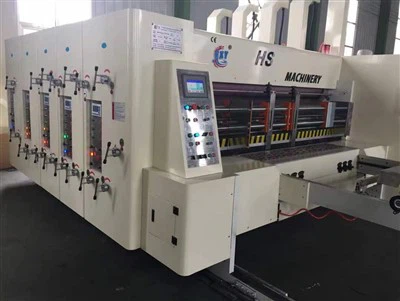
At the end of the day, operating a second-hand corrugated box machine safely isn’t rocket science. It’s just being present, checking stuff before you run it, and not cutting corners. If you’re looking for a used machine, I’ve got units from 2-color flexo folder-gluers to rotary cutters, all fully inspected and tested before they leave my shop. If you have questions about a specific model, or want to chat specs, feel free to reach out. I don’t do pushy sales stuff—just honest advice, because I’ve been in this game long enough to know that a safe customer is a repeat customer, and that’s better than any one-off sale.
Cardboard Box Making Machine References:
- Occupational Safety and Health Administration (OSHA). Machinery and Machine Guarding. 29 CFR 1910.212.
- Corrugated Packaging Association. Best Practices for Secondary Corrugated Equipment Operation. 2022.
- National Institute for Occupational Safety and Health (NIOSH). Preventing Injuries from Paper and Packaging Machinery. 2021.
- International Corrugated Box Manufacturers Association (ICBMA). Safety Guidelines for Used Industrial Machinery. 2023.
- Machinery Safety Association of North America (MSANA). Pre-Operational Inspection Protocols for Industrial Processing Equipment. 2020.
Guangzhou HS Machinery Co., Ltd.
We’re well-known as one of the leading corrugated box machine second hand manufacturers and suppliers in China. Please feel free to buy cheap corrugated box machine second hand for sale here from our factory. Quality products and low price are available.
Address: Xiaowu 1st Industrial Area, Xiaowu Village, Dongchong Town, Nansha, Guangzhou, China
E-mail: vipmachinery@126.com
WebSite: https://www.cartonboxsolutions.com/
