If you’ve ever needed reliable, consistent alkane products for industrial or manufacturing processes, chances are you’ve worked with a material that’s foundational to countless supply chains—whether you realize it or not. As an alkane products supplier, I field questions every week about how these simple, carbon-hydrogen chain molecules interact with other chemicals, and why that reactivity (or lack thereof) makes them so valuable for so many different applications. Today, I want to pull back the curtain on that chemistry, explain what makes alkanes behave the way they do, and walk through the most common reactions our customers rely on, plus how we tailor our product grades to support those needs. Alkane Products
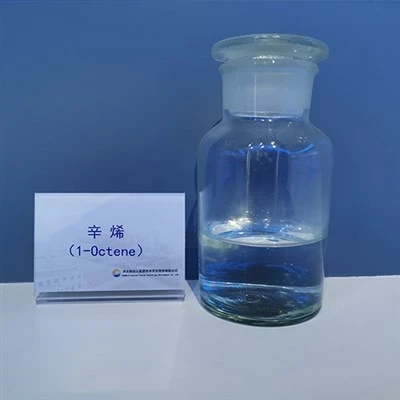
First, let’s start with the basics that make all the difference for reactivity. Alkanes are saturated hydrocarbons, meaning every carbon is bonded to the maximum number of hydrogen atoms possible, with only single covalent bonds between carbons. That simple structure is why alkanes are often called “paraffins” (a term that literally means “little affinity”)—their full valence shells make them naturally unreactive under mild conditions, like room temperature or normal atmospheric pressure. That’s a feature, not a bug: for applications where you need a stable, inert base or solvent, that low reactivity is exactly what you’re looking for. But when you do want to trigger a reaction, there are specific conditions that work because those strong, non-polar C-C and C-H bonds aren’t easy to break—you need enough energy, or a reactive enough partner, to pull them apart.
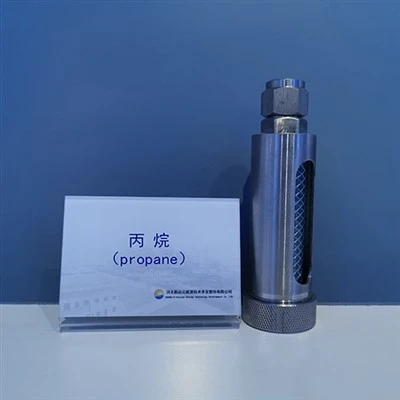
Let’s dive into the most common reactions alkane products participate in, organized by how our customers actually use them, not just textbook chemistry. The first, and most widely used for industrial alkanes, is combustion. This is the reaction we all learn about in high school: alkanes react with oxygen to produce carbon dioxide, water, and a large amount of heat and light. For our customers in energy production (think: natural gas distributors, heating fuel suppliers), this is the core function of their product. But even for industrial manufacturers who don’t use alkanes as a fuel, combustion is a key reaction for waste disposal—many facilities use controlled incineration to safely dispose of unused alkane streams, since the only byproducts are simple, non-toxic gases when done correctly. What’s important here is that different alkane grades have different combustion properties: for example, propane (a shorter-chain alkane, C3H8) ignites at a lower temperature than longer-chain alkanes like paraffin wax (C25H52), so we work with customers to grade their products specifically for their combustion needs—whether that’s a low-flame fuel for home heating or a high-energy burn for industrial incineration.
The next big reaction, and the one that turns raw alkanes into the building blocks for thousands of other products, is substitution. This is where a hydrogen atom in the alkane chain gets swapped out for another atom or group, most commonly a halogen like chlorine or bromine, or a functional group like a hydroxyl. The most common example is chlorination: when alkanes are exposed to chlorine gas in the presence of ultraviolet light (which provides the energy needed to break those strong C-H bonds), you get a mix of chlorinated alkanes—like methyl chloride, dichloromethane, or even longer-chain chloroparaffins. These chlorinated derivatives are used as solvents, lubricant additives, and even in the production of plastics. As a supplier, we see a lot of demand for custom chlorinated alkane blends, because different customer applications call for specific chain lengths and chlorine content. For example, metalworking fluid manufacturers need medium-chain chlorinated alkanes that can reduce friction at high temperatures, while paint companies need shorter-chain derivatives that evaporate at a controlled rate. We work closely with each customer to test which blend works best, so they don’t have to waste time or money adjusting processes to fit a one-size-fits-all product.
Another key substitution reaction is alkylation, which is super important for the oil refining industry, and one that our long-chain alkane products support heavily. Alkylation combines small alkane molecules (like isobutane, a branched alkane) with light olefins (unsaturated hydrocarbons) to make larger, branched alkanes that are high-octane components of gasoline. This reaction takes place under acidic conditions (usually with a catalyst like sulfuric acid or hydrofluoric acid) and is a core part of making gasoline that burns efficiently in car engines. Our supply of high-purity isobutane and normal butane is a staple for refineries that run alkylation units, because even small impurities in the alkane feedstock can throw off the reaction, lower octane ratings, and create unwanted byproducts. That’s why quality control is non-negotiable for us—we test every batch of alkanes we ship to make sure they meet the strict purity specs refineries need for alkylation.
Then there’s oxidation, which is a bit more nuanced than combustion, because it doesn’t go all the way to CO2 and water. Partial oxidation of alkanes is how you make a huge range of industrial chemicals. For example, when methane (the simplest alkane, CH4) is partially oxidized at high temperature with a catalyst, you get methanol, which is used to make plastics, adhesives, and even fuel additives. For longer-chain alkanes, partial oxidation is used to make fatty acids, alcohols, and soaps. Paraffin wax, a common alkane product we supply to candle and cosmetics makers, is oxidized at controlled temperatures to create fatty acids that are used in everything from moisturizers to laundry detergent. Here’s where our role as a supplier matters beyond just shipping product: many of our customers in the chemical manufacturing space use our alkanes as a feedstock for these oxidation reactions, so we provide detailed technical data sheets on each batch—including boiling points, chain length distribution, and impurity levels—to help them optimize their oxidation processes. For example, a customer making stearic acid from paraffin wax needs a very narrow range of chain lengths to get the right melting point, so we can tailor our product to that specific distribution, rather than a generic paraffin blend.
It’s also worth talking about when alkanes don’t react, because that’s just as important as when they do. Their natural inertness is why alkanes are such great solvents, lubricants, and packaging materials. For example, mineral oil, a mixture of medium-chain alkanes, is used as a lubricant in everything from car engines to medical devices, because it doesn’t react with the metal or plastic parts it touches. White petrolatum, another alkane-based product, is used in pharmaceuticals and skin care because it’s non-reactive with skin and other ingredients, so it acts as a stable base for creams and ointments. As a supplier, we regularly get orders for high-purity alkanes for these applications, and we prioritize purity testing to remove any reactive impurities that could cause discoloration, odor, or unwanted reactions in the final product.
Now, let’s talk about common mistakes we see customers make when working with alkane reactions, because learning from that has shaped how we support our clients. One big one is not accounting for branched vs. straight-chain alkanes in reactions like alkylation or substitution. Branched alkanes have different reactivity than straight-chain ones—for example, branched alkanes have more tertiary hydrogen atoms, which are easier to swap in substitution reactions, so they react faster. A customer that uses straight-chain alkanes for a chlorination reaction might get a different rate and product mix than a customer using branched alkanes, even if the chain length is the same. That’s why we always ask potential customers about their specific reaction process, not just the type of alkane product they need—because that lets us recommend the right alkane structure to get the results they want.
Another common issue is not considering storage conditions, which can impact how alkanes react even before they reach the customer’s facility. Alkanes are non-polar, so they don’t mix with water, but they can absorb small amounts of impurities from storage tanks if the tanks aren’t properly lined. Those impurities can catalyze unwanted reactions, like oxidation or polymerization, leading to off-spec product. We provide storage guidelines with every shipment, and for long-term contracts, we even work with customers to audit their storage facilities and make recommendations on lining materials or temperature control to prevent unwanted pre-shipment reactions.
As an alkane products supplier, our goal isn’t just to ship a chemical— it’s to be a partner that understands how our products interact with the other chemicals our customers work with. Whether you’re a refiner using alkanes for alkylation, a chemical manufacturer using them as a feedstock for chlorination or oxidation, or a personal care brand using them for stable formulations, the reactivity of alkanes is at the core of what you do. We’ve spent years refining our product lines, quality control processes, and technical support to make sure our customers get exactly the alkane product they need, with the consistency to keep their reactions on track and their operations running smoothly.
If you’re working with alkane products right now, or if you’re planning a new project that relies on alkane reactions, I’d encourage you to reach out to our team to talk through your specific needs. We can share technical data, recommend the right product grade for your reaction, and even help you troubleshoot any reactivity issues you’ve run into in the past. We pride ourselves on being transparent about our products’ properties and reactivity, so you never have to worry about unexpected results when our alkanes mix with the other chemicals in your process. Don’t hesitate to connect with our sales team to start a conversation about your next alkane order.
Flame Retardants References:
- Clayden, J., Greeves, N., & Warren, S. (2012). Organic Chemistry (2nd ed.). Oxford University Press.
- Speight, J. G. (2019). Handbook of Petroleum Product Analysis (2nd ed.). John Wiley & Sons.
- Ross, S. (2015). Industrial Solvents Handbook (3rd ed.). CRC Press.
- Morrison, R. T., & Boyd, R. N. (2014). Organic Chemistry (7th ed.). Pearson.
- Kroschwitz, J. I. (Ed.). (2004). Kirk-Othmer Encyclopedia of Chemical Technology (5th ed.). John Wiley & Sons.
Hebei Xinxinyuan Energy Co., Ltd.
Hebei Xinxinyuan Energy Co., Ltd. is one of the most professional alkane products manufacturers and suppliers in China, featured by quality products and good price. Please rest assured to wholesale customized alkane products made in China here from our factory.
Address: Zhongjie Industrial Park, Huanghua City, Cangzhou City, Hebei Province, China
E-mail: atl2066@qq.com
WebSite: https://www.xinxinyuanfr.com/
