Yo, what’s up! I’m a copper plate supplier, and I’ve been in this business for quite a while. Copper plates are pretty amazing, and today, I wanna talk about their chemical properties. It’ll help you understand why they’re so useful in a whole bunch of applications. Copper Plate
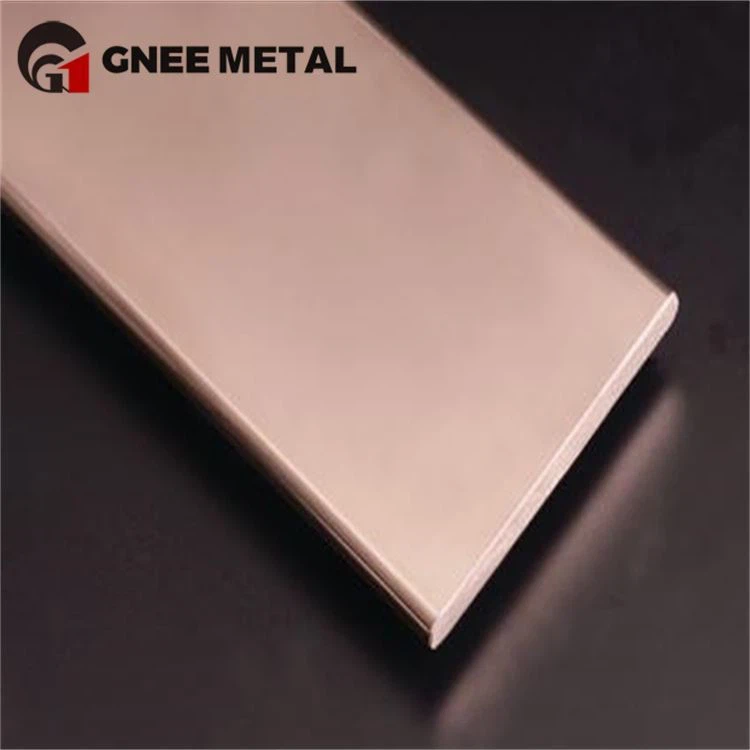
Let’s start with the basics. Copper’s got the atomic number 29 on the periodic table, and its chemical symbol is Cu. Pure copper plates are made up of these copper atoms. One of the first things you’ll notice about copper is its color. It’s got this reddish – orange hue, which is pretty distinct. That color comes from the way copper interacts with light on a chemical level.
Okay, let’s get into the reactivity of copper plates. Copper is moderately reactive. It doesn’t react as violently as some metals like sodium, which can catch fire when it touches water. But it does react with certain substances over time.
One of the most common reactions is with oxygen in the air. When copper plates are exposed to air, they gradually form a layer of copper oxide on their surface. This process is called oxidation. You’ve probably seen the greenish – blue patina on old copper statues or roofs. That patina is actually a complex mixture of different copper compounds that form when copper reacts with oxygen, carbon dioxide, and water in the air. The initial oxidation forms copper(I) oxide (Cu₂O), which is a red – brown color. With more exposure, it can further react to form copper(II) oxide (CuO), which is black.
2Cu + O₂ → 2CuO
Now, how does this oxidation affect the use of copper plates? Well, in some cases, it’s actually a good thing. The layer of copper oxide can act as a protective barrier, preventing further oxidation of the underlying copper. This is why copper roofs can last for decades. They form that patina, and it shields the rest of the copper from more severe corrosion. In other applications, though, like in electronics, you don’t want that oxidation. It can interfere with the electrical conductivity of the copper plate. So, in those cases, we often coat the copper plates to prevent oxidation.
Another important chemical property is copper’s reaction with acids. Copper doesn’t react with dilute acids like hydrochloric acid (HCl) or sulfuric acid (H₂SO₄) under normal conditions. This is because copper is less reactive than hydrogen in the activity series. But it will react with concentrated acids, especially with nitric acid (HNO₃).
When copper reacts with concentrated nitric acid, it forms copper(II) nitrate, nitrogen dioxide gas, and water. The reaction is quite spectacular. You’ll see a brown gas (nitrogen dioxide) being produced, and the solution will turn blue because of the copper(II) nitrate.
Cu + 4HNO₃(conc.) → Cu(NO₃)₂+ 2NO₂ + 2H₂O
This reaction is used in some industrial processes to dissolve copper and recover it. It’s also important in analytical chemistry, where chemists use nitric acid to analyze the copper content in samples.
Copper plates also react with halogens. For example, when copper reacts with chlorine gas, it forms copper(II) chloride. The reaction is highly exothermic, which means it releases a lot of heat.
Cu + Cl₂ → CuCl₂
This reaction is used in the production of copper – based catalysts and some types of pigments.
Now, let’s talk about copper’s role in electrochemistry. Copper is a great conductor of electricity. This is because of its free electrons that can move easily through the metal lattice. In electrochemical cells, copper can act as either an anode or a cathode depending on the other materials in the cell.
In a copper – zinc electrochemical cell (a type of battery), zinc acts as the anode and copper acts as the cathode. At the anode, zinc atoms lose electrons and dissolve into the solution as zinc ions. At the cathode, copper ions in the solution gain electrons and are deposited as copper atoms on the copper plate.
At the anode: Zn → Zn²⁺ + 2e⁻
At the cathode: Cu²⁺ + 2e⁻ → Cu
This process is used in electroplating, where a thin layer of copper is deposited on another metal. It can improve the appearance, corrosion resistance, and electrical conductivity of the object.
Copper plates are also used in the manufacturing of printed circuit boards (PCBs). The high electrical conductivity of copper makes it ideal for carrying electrical signals between different components on the board. And because of its relatively low reactivity compared to some other metals, it can maintain its conductivity over time.
In the chemical industry, copper plates are used as catalysts for various reactions. For example, in the production of methanol, copper catalysts are used to speed up the reaction between carbon monoxide and hydrogen.
The solubility of copper compounds is another important aspect. Some copper salts are soluble in water, like copper sulfate (CuSO₄), while others are insoluble, like copper carbonate (CuCO₃). The solubility of these compounds affects how we use copper in different chemical processes. For instance, copper sulfate is often used in agriculture as a fungicide and in laboratories for various chemical tests.
Okay, so why are these chemical properties important for you as a potential buyer? Well, depending on your application, you need to consider how the copper plate will react with its environment. If you’re using it in an acidic environment, you need to make sure it can withstand the reaction. If you’re using it in electronics, you want to keep oxidation to a minimum.
If you’re in the market for high – quality copper plates, you’ve come to the right place. I’ve got a wide range of copper plates with different thicknesses and purities. Whether you need them for electroplating, PCBs, or any other application, I can provide you with the right product. And because I understand the chemical properties of copper plates inside out, I can give you advice on how to best use them and maintain them.

So, if you’re interested in buying copper plates, don’t hesitate to reach out for a chat. We can discuss your specific requirements, and I’m sure we can come up with a great solution for you.
Copper Bar References
- Tro, N. J. (2017). Chemistry: A Molecular Approach. Pearson.
- Ebbing, D. D., & Gammon, S. D. (2017). General Chemistry. Cengage Learning.
Gnee Steel (Tianjin) Co., Ltd.
Gnee Steel (Tianjin) Co., Ltd. is one of the leading copper plate manufacturers and suppliers in China. We warmly welcome you to buy discount copper plate for sale here from our factory. All our products are with high quality and competitive price. Contact us for more cheap products.
Address: No.4-1114, Beichen Building, Beicang Town, Beichen District, Tianjin, China
E-mail: sales@gneemetal.com
WebSite: https://www.chinacopperalloys.com/
