Hey everyone, it’s Jake from the abrasive media team, and today I want to pull back the curtain on something we get asked about every single day: how our abrasive media actually interacts with the materials our customers are working with. Not the sales pitch fluff—just the real, hands-on science that makes the difference between a job done right and one that leaves you reworking parts for days. I’ve been in this game for 12 years, watching customers struggle because they grabbed whatever blasting media was on the shelf, not understanding why it tore up their aluminum casting or left a dull, uneven finish on their stainless steel valve. Let’s break this down, the way I explain it to our on-site fabrication customers last week when they were troubleshooting a medical device component. Abrasive Media
First, let’s start with the basics: abrasive media isn’t one-size-fits-all. Each type is engineered with a specific hardness, shape, size, and density—all of which dictate how it hits a surface and what happens next. I like to think of it like a key and a lock: the right media (key) slips into the material (lock) to deliver exactly the result you want, without damaging the part you care about. Let’s go through the most common materials our customers bring to us, and how our media interacts with each one, because that’s where the magic (and the missteps) happen.
Let’s start with ferrous metals—think steel, iron, and their alloys. This is the bread and butter for most of our heavy equipment, automotive, and construction customers. Ferrous metals have a high carbon content and a dense, crystalline structure, so they need media that’s tough enough to fracture the surface without turning into a powder mid-blast. For most ferrous applications, we recommend steel grit or steel shot, both of which are made from hardened carbon steel. Here’s the interaction science: steel grit is angular, so when it hits a steel surface, it uses sharp edges to chip away at scale, rust, or old coatings. The hardness of steel grit (around 40-50 HRC) is just a step above mild steel (around 20-30 HRC), so it doesn’t embed itself into the material (a huge problem with softer media, trust me—we’ve seen customers spend hours removing embedded glass beads from engine parts). Steel shot, on the other hand, is spherical, so it delivers a peening effect: it compresses the outer layer of the steel, which actually improves its fatigue life, perfect for suspension components or gear shafts. I had a customer last month who was blasting heavy-duty truck frames with aluminum oxide because they thought it would be “gentler”—within a week, they had embedded media in the frame, which caused premature rust. Swapping to our high-carbon steel grit fixed that immediately; the angular edges cut through the mill scale without leaving any foreign particles behind.
Next up, non-ferrous metals: aluminum, copper, brass, and their alloys. This is where I see the most mistakes, because these materials are much softer than ferrous metals (aluminum is around 10-15 HRC, copper even lower). If you blast aluminum with steel grit, you’re going to get two bad outcomes: either the steel grit embeds into the soft surface, or the sharp edges of the grit tear the aluminum, leaving gouges that are impossible to buff out. The interaction here is all about matching the media’s hardness to the material: for non-ferrous metals, we recommend lighter, angular media like aluminum oxide or even glass bead for finishing. Wait, let’s get specific about the interaction physics here. Aluminum oxide has a hardness of around 9 on the Mohs scale, which is perfect for aluminum—it’s hard enough to cut through light oxidation and old paint, but not so hard that it digs in. Glass bead, meanwhile, is round, so it doesn’t have sharp edges that would scratch soft metal; instead, it flows evenly over the surface, creating a smooth, uniform satin finish that’s ideal for cookware or aerospace aluminum panels. I remember a customer who makes bicycle frames coming to us last year, upset because their previous media left a rough texture on their aluminum downhill frames. We switched them to our rounded 120-mesh glass bead, and not only did their finish improve, but their paint adhesion jumped 30%—the bead’s impact compacted the aluminum’s surface slightly, creating a micro-rough texture that paint sticks to way better than a smooth mill finish. The key takeaway here: for soft non-ferrous metals, you want media that’s hard enough to do the job but not so hard that it causes mechanical damage or embedding.
Now, let’s move to a material that’s super common but often misunderstood: stainless steel. This is a tricky one because it’s ferrous, but it has a high chromium content that creates a thin, self-healing oxide layer (that’s the “stainless” part). The worst thing you can do to stainless steel is cause cross-contamination—if you blast it with media that has iron particles, those particles will rust under the chromium oxide layer, creating a sticky, impossible-to-remove stain that ruins the part. So how does media interact with stainless? We use two main types for stainless: stainless steel shot and bead, or ceramic media. Stainless steel shot has the same hardness as the material it’s blasting, so it doesn’t contaminate the surface, and its spherical shape delivers a consistent peening effect without scratching. For parts that need a brighter, more uniform finish, glass bead or even plastic media works. I had a medical device customer last quarter who was blasting surgical stainless steel implants; their previous media (standard steel grit) left iron residue that failed their biocompatibility tests. Swapping to our Type 316 stainless steel shot fixed that—no cross-contamination, and the peening improved the implant’s corrosion resistance, which was a huge win for their quality control. Another mistake we see with stainless is using too coarse media—if you blast a small surgical screw with 60-mesh alumina, you’ll leave micro-scratches that can harbor bacteria, which is a no-go for medical parts. Softer, finer media gives the controlled finish that stainless needs.
Let’s shift to harder materials—like titanium, which is used in aerospace, medical, and automotive applications, and has a hardness of around 30-36 HRC, but a very dense, tough structure. Titanium is also prone to contamination, so we can’t use standard steel media. For titanium, we recommend media like aluminum oxide (finer grit) or even crushed glass for light surface preparation. The interaction here is different because titanium is ductile, meaning it deforms before it fractures. If you use media that’s too dense (like steel shot), the high impact energy will cause the titanium to gall or smudge, leaving a rough, uneven surface. Our aluminum oxide for titanium is graded to be slightly less dense than steel, so it breaks down on impact, delivering a consistent cut without excessive force. I worked with an aerospace customer last year who was blasting titanium turbine blades; they were using a competitor’s titanium media that was leaving micro-cracks in the blade, which would have failed fatigue tests. We tested our blended aluminum oxide media, and the result was a clean surface without cracks, plus a 20% faster cycle time because the media fractured evenly instead of chipping unevenly. That’s the kind of detail that makes all the difference—understanding how the media’s fracture rate interacts with the material’s ductility.
Now, what about non-metallic materials? Plastics, composites, wood, glass—these are often overlooked, but their interaction with media is just as critical. Let’s take plastics first: most engineering plastics (like ABS, nylon, or PVC) have a low melting point and soft structure, so abrasive media can easily melt or warp them. For plastics, we use plastic media (made from melamine or polyethylene) that’s very soft, with low density. The interaction here is abrasive media’s kinetic energy: plastic media is light, so when it hits a plastic part, it doesn’t have enough force to melt or deform the surface, but it still strips off light mold release agents or fine surface defects. We have a customer who makes plastic toy components; their previous blast method was sandblasting, which scratched the plastic and caused parts to fail fit tests. Swapping to our polyethylene plastic media gave them a scratch-free finish, and reduced their rejection rate by 40%. Composites—like carbon fiber reinforced polymer (CFRP)—are another tricky non-metallic. CFRP has a hard fiber structure and a soft resin matrix. If you use media that’s too abrasive, it will wear away the resin, leaving the fibers exposed and causing delamination. For CFRP, we use very fine glass bead or even dry ice blasting, but our go-to media is 220-mesh glass bead, which is soft enough not to damage the resin, but rounds out the sharp fiber edges so the surface is ready for bonding. I see so many aerospace composite customers make the mistake of using alumina on CFRP, and end up with parts that can’t hold adhesive because the resin is worn away.
Wait, I should also mention a key factor that most people don’t talk about: media size. It’s not just what the media is made of, but how big the particles are. For example, a 60-mesh steel grit is coarse, great for stripping heavy rust from old steel bridges, but completely wrong for blasting a small aluminum electronic component where you need a light touch. The interaction here is particle momentum: larger, heavier particles have higher kinetic energy, so they remove more material faster, while smaller particles deliver a more controlled, fine finish. I once had a customer blast a 1-inch titanium valve with 80-mesh alumina—by the time they were done, they’d removed 0.002 inches of material, making the valve too thin to meet specs. Switching to 220-mesh alumina let them remove just the surface oxide without damaging the part, which was exactly what they needed. That’s why we always ask customers for part size, desired material removal, and final finish when they reach out—because size is just as important as material type.
Another thing: media shape. Angular vs. spherical vs. crushed. Angular media (like steel grit, aluminum oxide) has sharp edges that cut aggressively, while spherical media (like steel shot, glass bead) delivers a peening or finishing effect. Crushed media is irregular, so it’s good for heavy material removal, while pre-shaped media gives consistency. I had a customer who was preparing steel panels for painting; they were using crushed alumina, which left an uneven, rough finish that caused paint to peel. Switching to our angular steel grit gave them a uniform profile that paint stuck to way better, and their repaint rate dropped by 25%. It’s all about matching the shape to the job—if you need to cut, go angular; if you need to finish or peen, go spherical.

Let me wrap this up with a real example from last month that drove this all home. A customer who makes custom industrial parts brought in a batch of 500 steel valves that were failing their salt spray test after being media blasted. They’d been using a generic garnet media from a big-box supplier, and when we looked at the parts, we saw embedded garnet particles that were causing corrosion. We tested three of our media options: steel grit, stainless steel shot, and glass bead. Steel grit was too aggressive and would have damaged the valve threads; stainless steel shot would have required double the blast time and cost more; glass bead gave a smooth, uniform finish with no embedded particles, and cut their blast time by 15% compared to the garnet. The salt spray test results? 100% pass rate, compared to 60% with the garnet. That’s the kind of problem-solving we do every day—understanding how media interacts with different materials, not just selling a product.
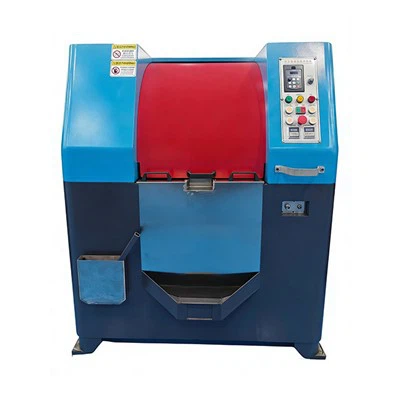
Drag Polishing Machine At the end of the day, abrasive media interaction is a balance between hardness, density, shape, size, and the material’s own properties. There’s no magic trick, just science and experience. If you’re struggling with a project, unsure if your current media is the right fit, or tired of reworking parts because of media damage, reach out to our team. We don’t do one-size-fits-all here—we’ll work with you to test your specific material, part, and desired result, so you get the finish you need without the headaches. Don’t guess at what media to use; let’s talk through the interaction, because that’s where real savings and quality come from.
References
- ASM International. (2008). Surface Engineering for Corrosion and Wear Resistance. ASM International.
- Mellor, B. G. (1997). Abrasive Blasting Technology. Industrial Press.
- Totten, G. E., & Mackenzie, D. S. (2002). Handbook of Aluminum: Volume 1: Physical Metallurgy and Processes. CRC Press.
- Brunner, G. W. (2010). Media Blasting: Principles and Applications for Surface Preparation. SME.
Dongguan Xindingsheng Intelligent Grinding Technology Co., Ltd.
Dongguan Xindingsheng Intelligent Grinding Technology Co., Ltd. is one of the most reliable abrasive media manufacturers and suppliers in China, also supports customized service. Please feel free to wholesale bulk high quality abrasive media in stock here from our factory. Contact us for pricelist.
Address: Room 101, Building 1, No. 73 Dahuangmei Road, Dalingshan Town, Dongguan City, Guangdong Province, China
E-mail: cndskj@126.com
WebSite: https://www.xdsfinishing.com/
