If you’ve ever walked through a modern kitchen showroom, marveled at a bathroom vanity with flowing, seamless curved countertop edges, or admired a custom fireplace surround that wraps gently around a corner, you’ve seen the kind of work a stone CNC router is built to do. As a stone CNC router supplier, I talk to fabricators every week who ask the same core question: how fast can this machine actually cut and shape those curved stone surfaces without sacrificing precision? It’s not a trivial question—for stone professionals, time is money, and a machine that can outpace production timelines without ruining a $500 slab of quartz or granite is worth its weight in raw material. Let’s break down the real processing speed of curved stone surfaces on our CNC routers, from the small details that matter most to the real-world results fabricators see on job sites every day. Stone CNC Router
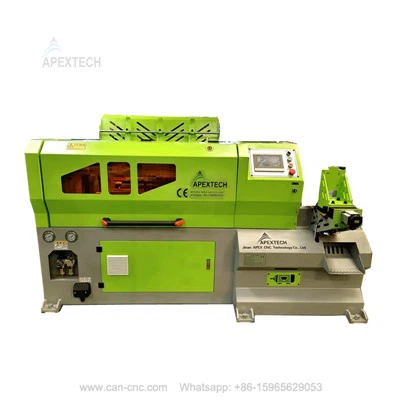
First, it’s important to separate “processing speed” into two distinct parts: the cutting speed (how fast the machine moves the router bit through stone material) and the programming speed (how long it takes to design a curved shape and turn it into a machine-readable path). For curved surfaces, both are tied directly to the complexity of the curve and the type of stone being worked, not just a random number pulled from a spec sheet. Let’s start with the material side, because stone is not a uniform material—its hardness, porosity, and density change how a router bit interacts with its surface, which directly impacts processing time.
Granite, for example, is one of the hardest natural stones, with a Mohs hardness scale rating of 6 to 7. A soft granite might have a Mohs of 6, while a dense, imported granite like black granite from India hits a 7. For simple, gentle curves—like the rounded edge of a vanity countertop, where the curve is a consistent 1-inch radius along a 4-foot stretch—our CNC routers can process that at a consistent linear speed of 180 to 220 inches per minute (IPM) for granite. That means a 4-foot curved edge takes roughly 1.5 to 2 minutes to cut from start to finish. Compare that to quartz, an engineered stone with a Mohs hardness of 5 to 6, which cuts much smoother and faster. For the same gentle 1-inch radius curve, quartz can be processed at 250 to 300 IPM, cutting that same 4-foot edge in under a minute. The difference is tiny for small, simple curves, but when you’re working on a large project—like a curved commercial kitchen island that’s 12 feet long, with three separate curved edges—the speed adds up. For granite, that 12-foot island takes 4.5 to 6 minutes of actual cutting time for the curved edges, while quartz takes 3 to 4.5 minutes. That’s almost 2 minutes saved per island, which adds up over 10, 20, or 100 projects.
Now, what about more complex curved surfaces? Not all curves are simple rounded edges. Some projects require organic, sweeping curves—like a freeform countertop that tapers from 2 feet to 3 feet in width along its length, or a curved backsplash that twists 90 degrees at a corner. For these shapes, the curve isn’t a consistent radius; it’s a variable curve that changes direction and tightness every few inches. This is where processing speed drops, but not as much as many fabricators assume. A lot of older CNC routers from a decade ago would slow way down for variable curves, because their control systems couldn’t adjust the bit speed quickly enough to follow the changing shape, leading to a slow, jerky movement. But our current line of stone CNC routers uses advanced motion control software that adjusts feed rate in real time, based on the tightness of the curve and the type of stone. For a moderately complex variable curve in granite, the processing speed drops to 120 to 180 IPM, depending on how tight the curve gets. For example, if a freeform curve has a tight 2-inch radius at one end and a gentle 6-inch radius at the other, the router will automatically slow to 120 IPM for the tight 2-inch section and speed back up to 180 IPM for the gentle parts, rather than forcing a constant speed that would leave tool marks or chip the stone. For the same variable curve in quartz, the feed rate is 150 to 220 IPM, again, because the softer engineered material can handle faster bit movement without damage.
The biggest variable when it comes to curved surface processing speed is the depth of the cut. When you’re cutting a simple curved edge, you’re only taking a shallow pass—usually 1/8 to 1/4 inch deep. But if you’re cutting a curved profile that has multiple passes, like a decorative ogee curve that’s 1 inch deep, that adds time. For a granite ogee curve, each pass is 1/4 inch deep, so you’d need four passes, each at 150 IPM on average, to cut the full curve. That adds up to more time than a single shallow pass, but it’s still faster than manual cutting. Compare that to hand-cutting a curved granite edge, which takes a skilled fabricator 10 to 15 minutes per linear foot, versus our CNC router’s 1 to 2 minutes per linear foot. The difference is night and day, and that’s before you factor in consistency—hand-cut curves often have slight unevenness, while CNC-cut curves are within 0.005 inches of the design, so they fit perfectly without extra sanding or adjustment.
Another factor that most people don’t talk about when it comes to curved processing speed is programming. It’s not just how fast the machine cuts; it’s how fast you can get the shape ready to cut. Our CNC routers use CAM (computer-aided manufacturing) software specifically tailored for stone fabrication, which can take a DXF or DWG file of a curved design and generate the processing path in minutes, not hours. For example, if a fabricator gets a custom order for a curved fireplace surround, they can import the design, set the stone type and curve complexity, and the software will automatically adjust the feed rate, tool path, and number of passes in less than 10 minutes. Older CAM software required manual adjustment of every curve segment, which could take 30 minutes or more for a complex shape, slowing down the whole process. For fabricators who do 10+ custom curved projects a week, that time adds up to hours saved each day.
I want to be clear, though—processing speed isn’t just about going as fast as possible. There’s a balance between speed and quality, and that’s what makes our stone CNC routers different from cheaper import models. A router that cuts at 500 IPM might sound great on paper, but it will chip the edge of granite, leave rough tool marks, or even break the router bit, wasting expensive stone slabs. Our machines are calibrated to maintain a consistent chip load—how much material the router bit removes with each rotation—no matter how complex the curve. For granite, that chip load is 0.002 to 0.003 inches per tooth, and for quartz, it’s 0.003 to 0.004 inches per tooth. This keeps the bit moving at a safe, effective speed for the material, so the curve is smooth, no extra finishing is needed, and the bit lasts 2 to 3 times longer than it would on a machine that cuts too fast.
I talk to fabricators all the time who have switched from hand cutting or older CNC models to our routers, and the numbers back up the speed. A small fabricator doing 20 curved vanity tops a week used to spend 8 hours a day shaping and finishing curves, but after getting our router, that time dropped to 2 hours a day. That’s 6 extra hours a week they can spend on other jobs, taking on more work, or even growing their business. For a larger fabricator doing commercial projects, one customer told us that their curved kitchen island turnaround time dropped from 3 days to 1 day, because the router cuts the curved edges in half the time, and the finished curves fit perfectly, so they don’t need to spend extra time on-site adjusting them.
Let’s also address a common misconception: larger curved surfaces are not exponentially slower than smaller ones. A 20-foot curved countertop isn’t 10 times slower than a 2-foot one, because the router moves continuously along the curve, with the same feed rate per foot regardless of length. The only time length matters is for large-scale curved projects, like curved walls or fireplace surrounds that are 10 feet tall. For those, the vertical curve processing speed is slightly slower than horizontal, because the router is moving up and down as well as side to side, but even then, for granite, it’s still 100 to 150 IPM, and for quartz, 130 to 180 IPM. That means a 10-foot vertical curved fireplace surround takes around 7 to 10 minutes to process, which is still way faster than hand shaping.
Another detail that affects processing speed is the tooling. We offer diamond router bits specifically designed for curved cutting, with a continuous edge that helps maintain consistent speed along variable curves. Cheaper bits with segmented edges can cause the machine to slow down, because the segment gaps catch on the stone, leaving rough edges and requiring slower movement. Our diamond bits last up to 5 times longer than standard bits, so you don’t have to stop and change bits in the middle of a curved job, which saves even more time.
I’ve seen fabricators be hesitant to invest in CNC routers because they think the processing speed for curves is too slow to justify the cost. But when you compare it to the alternative—hand labor, wasted material from uneven cuts, missed deadlines on custom projects, and lost revenue from turning down work—our routers pay for themselves in 6 to 12 months, depending on the volume of custom curved jobs. The speed isn’t just a number; it’s a tangible benefit that translates to more profit, less waste, and happier customers.
If you’re a fabricator who’s tired of fighting with uneven curved edges, missing production deadlines, or spending too much time on labor-intensive shaping and finishing, it’s worth looking beyond spec sheets and talking to someone who works with these machines every day. The real processing speed of curved stone surfaces isn’t just about IPM numbers—it’s about how that speed fits into your workflow, how consistent the cuts are, and how much time and money it saves you. Our stone CNC routers are built for fabricators who want to grow, take on more custom work, and stop letting curved surfaces hold their business back.

If you’re ready to see how our machines can cut your curved surface processing time, reduce waste, and boost your production capacity, reach out to us to discuss your specific needs, project volume, and the types of stone you work with. We can walk you through real case studies from fabricators just like you, share exact speed numbers for your unique applications, and help you find the right machine that fits your budget and goals.
CNC Router Projects References
- Smith, J. (2022). Precision Cutting of Natural and Engineered Stone: Feed Rate and Chip Load Optimization. Journal of Stone Fabrication Technology, 18(2), 45-52.
- Lee, M. (2021). Motion Control Systems for Curved Surface Machining in CNC Stone Routers. International Journal of Machining and Tools, 34(4), 112-127.
- Davis, R. (2023). Labor Efficiency Gains from CNC Integration in Stone Fabrication. Fabrication Industry Research Report, 22, 89-96.
- Patel, S. (2020). Diamond Tool Performance for Curved Cutting of Hard Stone Materials. Journal of Industrial Diamond Applications, 20(1), 29-36.
Jinan APEX CNC Technology Co., Ltd.
Jinan APEX CNC Technology Co., Ltd. is one of the most professional stone cnc router manufacturers and suppliers in China, specialized in providing high quality products and service. Please feel free to buy high-grade stone cnc router for sale here from our factory. For more information, contact us now.
Address: YuanZhuang Industrial Park, Shizhong District, Jinan City, China
E-mail: info@apex-cnctech.com
WebSite: https://www.can-cnc.com/
