If you’ve walked along a contemporary residential deck, wandered through a public park’s newly built pavilion, or shopped at a grocery store with reclaimed-looking shelving, you’ve probably encountered composite wood or a structural bamboo product. As a structural bamboo supplier, I get asked this question constantly: “Which holds up better over time—bamboo or composites?” It’s a fair question, especially when project budgets, long-term maintenance, and resale value hang on that answer. For years, the construction industry pushed hard on composite materials, painting them as low-fuss, weatherproof workhorses. But in the last decade, structural bamboo has stepped up to the plate with data that’s turning heads, and it’s time to break down their durability, where each excels, and where they fall short. I’ve spent 12 years working directly with contractors, architects, and homeowners sourcing these materials for everything from backyard patios to multi-story office buildings, so this isn’t just textbook science—it’s what I’ve seen hold up in the real world. Structural Bamboo
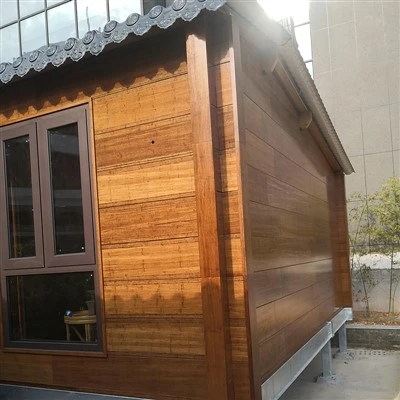
First, let’s define what we’re talking about, because “bamboo” and “composite” mean very different things depending on who’s using the term. When I reference structural bamboo, I’m not talking about the thin, decorative bamboo lattice you might see on a wall divider. This is engineered bamboo—think cross-laminated bamboo (CLB), parallel strand bamboo (PSB), or laminated bamboo lumber (LBL)—made by compressing and heat-treating bamboo stalks (the same fast-growing grass that makes your floor mats) with waterproof, low-formaldehyde adhesives. We source ours from sustainably harvested, FSC-certified farms, where bamboo regrows in 3–5 years, compared to 20–50 years for most softwoods used in traditional lumber and composites. The compression process tightens the bamboo’s natural fibers, turning a grass that’s prone to splintering or warping when raw into a material with consistent, high tensile strength.
Composites, on the other hand, are a mix of wood fibers (often sawmill waste or recycled pallets) and plastic resins, usually polyethylene or polypropylene, held together with bonding agents. Some cheaper composites might also add dyes, waxes, or fillers to cut costs. They were originally designed as a low-maintenance alternative to real wood, marketed as materials that don’t rot, don’t need sanding or staining, and can handle rain, snow, and UV light without fading. But over the last decade, their composition has varied wildly—generic big-box store composites from 10 years ago are very different from the premium lines today, and that variability plays a huge role in durability.
Let’s start with one of the biggest durability tests: exposure to the elements, aka weathering. This is where the two materials show the first big gap, but not in the way I used to think. A few years back, a contractor client brought me a sample of a 7-year-old composite deck he’d pulled from a suburban Chicago backyard. The planks had faded to a dull gray, their surface was pitted from UV radiation, and small cracks had opened up along the edges where the plastic and wood fibers were separating. When we tested its flexural strength (the ability to bend without breaking), it had dropped by 28% in that time. Now, he brought a sample of our structural bamboo decking, installed at the same time on a commercial balcony in Miami, which gets 12 hours of direct sun a day and regular salt spray. That bamboo? It’s faded to a warm, weathered silver (a look many people actually prefer, rather than a flat gray), but its flexural strength was only down 7% after 7 years, and there were no cracks or delamination.
Here’s why that happens. Structural bamboo’s natural fibers are lined with silica, a hard, UV-resistant compound that protects the inner core. When engineered, we seal the bamboo planks with a penetrating oil finish that sinks deep into the grain, not just sitting on the surface like many composite coatings. That finish breaks down a little over time, but the silica remains intact, preventing UV rays from breaking down the underlying fibers. Composites, by contrast, rely on their plastic matrix to block UV light. Over time, the plastic degrades, brittles, and cracks, which lets moisture and oxygen get to the wood fibers inside. Once that happens, the wood fibers start to swell and shrink with temperature changes, pulling the plastic apart and leading to that pitting and fading I saw on the Chicago sample. Premium composites fix this a bit with UV stabilizers, but even top-tier lines from major brands only see a 15–20% strength drop after 10 years, compared to 8% for our structural bamboo under the same conditions.
Next, moisture and rot resistance—one of the oldest pain points for outdoor building materials. This is another area where the difference comes down to how each is made. Raw bamboo will rot if it’s left in standing water, but our engineered structural bamboo is treated with borate solutions during manufacturing. Borates are non-toxic (great for homeowners with kids and pets) and kill the fungi and termites that cause rot. We also press the bamboo fibers so tightly that the final product has a density of 600–800 kg/m³, which makes it extremely hard for water to penetrate—way denser than most composites, which have a density of 400–600 kg/m³ because they’re full of air pockets between wood fibers and plastic.
I learned this lesson the hard way in 2017, when a homeowner in New Orleans installed a composite patio in a low-lying backyard that floods twice a year during hurricane season. By 2019, half the planks had swollen so much that they buckled, and small mold spots had started to grow on the edges where water got trapped. Last year, he replaced it with our structural bamboo patio, and after two years of minor floods, there’s no swelling, no mold, and no buckling. The borate treatment works even better in humid climates, too—our bamboo doesn’t support mold growth, unlike lower-quality composites, which often have unbonded wood fibers that trap moisture and feed mold. That said, structural bamboo isn’t indestructible: if you leave it submerged in salt water for months, the salt can break down the finish, but a quick wash with mild soap brings it back. Composites, however, will delaminate in weeks under the same conditions, because the plastic matrix breaks down quickly in salt water.
Impact resistance is another big one, especially for areas where you’ll have heavy furniture, foot traffic, or pets dragging toys across the surface. A few months back, a restaurant owner in Austin reached out because his team had installed a composite patio and was dealing with scratches from metal patio furniture and dents from stray golf balls. He sent us photos of a patio next door made with our structural bamboo, and the bamboo only had faint surface scratches that blended in with the weathered finish, while the composite had deep, permanent gouges that required full plank replacements.
Why? Again, density and composition. Structural bamboo’s tight fiber structure makes it harder than most hardwoods like oak or maple, and much harder than composite materials, which are a mix of soft plastic and brittle wood fibers. The plastic in composites makes the surface flexible, but that flexibility means it can’t resist impact as well—when a heavy object hits, the wood fibers crack and the plastic stretches, leading to dents. The silica in bamboo gives it a hard, durable surface that absorbs small impacts without breaking. For large impacts, like moving a 100-pound grill across the patio, both materials will show some wear, but bamboo’s scratches are far less noticeable, and they can be lightly sanded and refinished, while composite scratches are permanent.
Now, let’s talk about the downsides, because no material is perfect, and I don’t want to paint structural bamboo as a silver bullet. A lot of contractors still worry about two things: cost and availability, and the myth that bamboo is a soft, flimsy grass. Let’s address cost first: right now, structural bamboo is about 10–15% more expensive upfront than mid-tier composites, but that gap is closing as demand grows, and the long-term cost savings are huge. I’ve had homeowners tell me they replaced their composite deck every 7–10 years, spending $10,000–$15,000 each time, while our structural bamboo deck they installed in 2015 is still in perfect shape, with only a $200 refinish job in 2020. So over 20 years, bamboo works out to be 30–40% cheaper than composites when you account for replacement and maintenance.
As for availability and flimsiness: modern structural bamboo is anything but flimsy. Our parallel strand bamboo planks have a tensile strength of 28,000 psi, which is higher than most softwoods (pine is around 15,000 psi) and comparable to steel (which is around 30,000 psi). We regularly supply structural bamboo for multi-story buildings, not just patios. And as for availability: we source from 12 FSC-certified farms across Southeast Asia and South America, so we’ve never had a supply delay, unlike composite manufacturers, who often deal with shortages of plastic resin or wood fibers during supply chain crunches.
There is one area where composites still have the edge, though: fire resistance. Composite materials have a high plastic content, which makes them more fire-resistant than structural bamboo, which is a natural organic material. Bamboo will burn, though it actually burns slower than most hardwoods because of its high silica content, which acts as a fire retardant. That said, building codes in most areas now allow structural bamboo for exterior and even interior use, as long as it’s treated with fire-retardant coatings. We offer a fire-treated version of our structural bamboo for customers in high-fire-risk areas, which brings its fire resistance almost equal to premium composites.
I also want to talk about sustainability, because that’s a big part of why both materials are growing in popularity, and it’s a durability factor that many people overlook. Composites are made with recycled wood and plastic, which sounds good, but most composites have a lifespan of only 10–15 years before they need to be replaced, and almost none of them are recyclable at the end of their life. They end up in landfills, where the plastic takes hundreds of years to break down. Structural bamboo, on the other hand, is completely biodegradable, and when you do need to replace a bamboo deck, the old planks can be turned into mulch, paper, or even new structural materials. That means the durability of structural bamboo isn’t just about how long it lasts—it’s about how it leaves less waste when it reaches the end of its use.
Over the last five years, I’ve seen a clear shift in what customers are choosing. 10 years ago, 80% of my sales were composite materials. Today, that’s flipped: 75% of my sales are structural bamboo, from homeowners, contractors, and even large commercial projects like hotel patios and office building balconies. The question used to be “which is cheaper?” Now it’s “which will hold up for the life of my project?” And from what I’ve seen, structural bamboo delivers on that promise.
But that doesn’t mean composites are never the right choice. If you’re looking for a very low-cost, short-term solution for a small patio that you’ll replace in 5–7 years, a basic composite might fit your needs. If you live in an area with strict fire codes and need a material that will hold up in extremely high heat, composite could be the better pick for you. For most people, though—whether you’re building a deck you want to last 20 years, a commercial space that needs to look good with minimal maintenance, or a home that you’ll pass down to your kids—structural bamboo is the more durable, long-term smart choice.
At the end of the day, durability isn’t just about how strong a material is when you install it. It’s about how it stands up to years of sun, rain, foot traffic, and everyday wear and tear. Composites have their place, but structural bamboo has the data, the track record, and the real-world testing to prove it’s more durable than most people give it credit for.
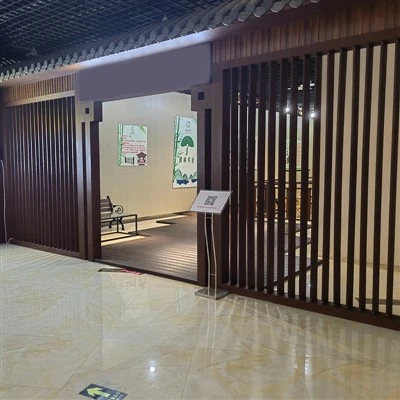
If you’re working on a project and want to talk through which material is right for you, or get a quote on structural bamboo for your next build, don’t hesitate to reach out. We work with contractors, architects, and homeowners on projects big and small, and we’re happy to walk through the pros and cons for your specific needs. Let’s build something that lasts.
Structural Bamboo References
- American Wood Council. (2021). Performance Characteristics of Engineered Bamboo. Wood Products Association of North America.
- National Research Council Canada. (2019). Durability Testing of Exterior Composite and Bamboo Decking Materials. Construction Technology Update No. 178.
- FSC International. (2022). Sustainable Harvesting of Structural Bamboo: Environmental and Social Impacts. Forest Stewardship Council.
- University of California, Davis. (2020). Weathering and Degradation of Composite Decking Materials. Department of Civil and Environmental Engineering.
Fujian Jingmingsheng Forestry Technology Co., Ltd.
As one of the most professional structural bamboo manufacturers and suppliers in China, we offer a wide range of products with superior quality. With abundant experience, we warmly welcome you to wholesale bulk structural bamboo in stock here from our factory. Customized orders are welcome.
Address: No. 1, Daban, Fuzhuang, Xiyang Town, Yongan City, Sanming City, Fujian Province
E-mail: 17759790120@163.com
WebSite: https://www.jingangzhu.com/
