Hey there, EPDM O Ring

If you’re shopping around for EPDM O rings, I bet one question’s been bouncing around your head a lot lately: “Are these things gonna play nice with petroleum-based products?” As someone who’s been selling EPDM O rings for over 12 years now—mostly to guys in automotive, plumbing, and industrial equipment repair—this is like the question we get asked more than “What’s your lead time?” or “Can you ship these next day?” So let’s break this down, no boring textbook jargon, and call it like it is.
First, let’s get one thing straight: petroleum-based products are basically oils, greases, fuels, hydraulic fluids, even some lubricants that come straight from crude oil. EPDM—wait, that stands for Ethylene Propylene Diene Monomer, right? It’s that synthetic rubber we use for O rings because it’s great at withstanding weather, heat, and ozone. But the big myth here is that EPDM’s bad for petroleum, and the truth is… it’s not that simple. It all depends on what kind of petroleum product we’re talking about, how hot it’s gonna get, and for how long.
Let’s start with what EPDM actually handles well. If you’re working with things like light hydraulic fluids, certain greases that are “non-petroleum” or have a low petroleum content, or even things like windshield washer fluid (wait, that’s not petroleum, but close enough for the point), EPDM O rings are usually a solid pick. I’ve got a customer who fixes classic car cooling systems—they use our EPDM O rings for the heater cores, and those have been holding up for 8 years no problem, even with the small amount of antifreeze that seeps in, which doesn’t mix much with petroleum here. Another guy does commercial dishwashers; his EPDM O rings for the water lines (which don’t touch fuel, just water and dish soap) never give him grief.
But here’s where most people mess up: they think all petroleum products are the same. Heavy-duty stuff like diesel fuel, motor oil with high aromatic content, or synthetic blends that have petroleum as a base—those are where EPDM starts to struggle. Aromatics, those little chemical compounds in petroleum, have this way of swelling rubber. EPDM’s structure is pretty polar, right? So when it comes into contact with high-aromatic petroleum, those aromatics can penetrate the rubber, make it stretch out, lose its shape, and eventually crack or leak. I had a customer a few years back who tried using our EPDM O rings for his small engine fuel lines—gasoline with ethanol, which is higher in aromatics than regular gas—and within 6 months, the O rings swelled so bad they couldn’t seal. He came back pissed, I get it, he thought he was doing the right thing.
Wait, but ethanol—let’s clarify that too. Gasoline with ethanol (E10, E85) is a petroleum product mixed with alcohol, and EPDM actually has mixed results here. E10 isn’t too bad, but E85 is way more harsh. I’d steer clear of EPDM for E85, no question. But regular old unleaded gas (non-ethanol) has worked for some of our customers in low-pressure applications—like small lawn mowers that only run a few months a year, not constant highway use.
Then there’s temperature. Even if you’ve got a petroleum product that’s “mild,” if it’s super hot, that changes everything. Heat makes rubber more porous, so the petroleum compounds can get in faster. If you’re running a system at 150°F or higher, EPDM’s resistance to petroleum drops off a cliff. I had a guy who used EPDM O rings for his garage compressor’s hydraulic lines, and they were running at 180°F—after a year, the O rings were hard and brittle, leaking oil all over his floor. He switched to nitrile (Buna-N) O rings, which we also sell, and those have been going strong ever since. Nitrile is way better for petroleum at high temps, by the way— that’s the big alternative people go to when EPDM isn’t cutting it.
So when is EPDM O ring actually compatible with petroleum-based products? Let’s make a quick list of the green zones here:
- Low-aromatic petroleum products (like light machine oils, mild hydraulic fluids that don’t have lots of heavy aromatics)
- Low-temperature applications (below 120°F, to be safe)
- Short-term exposure, not continuous immersion
- Non-aromatic petroleum greases (the ones labeled “petroleum-based but low-swell”)
And the red zones, where you should 100% skip EPDM for petroleum:
- High-aromatic fuels (diesel, E85, high-performance racing gas)
- Continuous immersion in heavy motor oil or industrial hydraulic fluids
- Temperatures over 150°F
- Any application where a leak would be a big deal—like fuel lines on a highway vehicle, you can’t risk that
Now, I know what you’re thinking: “Why would I even bother with EPDM if nitrile works better for petroleum?” Fair question. EPDM’s got other perks—better weather resistance, cheaper sometimes, works way better for water, steam, and silicone-based products. It’s not that EPDM is bad for petroleum, it’s just that it’s not the right fit for every petroleum job. The mistake people make is treating all O rings like one-size-fits-all, which is why I always tell my customers to send over the specs: what’s the fluid, temp, pressure, how long will it be in contact? That’s how we figure out if EPDM works, or if we need to point them to nitrile, viton, or another rubber.
I’ve had so many repeat customers because I’m straight with them. Last month, a guy who runs a fleet of delivery trucks came to me needing O rings for the fuel filters. He initially asked for EPDM, but after I told him about the high-aromatic diesel, we went with nitrile, and he saved himself the headache of replacements every few months. Another one did a food processing plant—they needed O rings for lines that touched vegetable oil (not petroleum, but he thought EPDM would work) and I checked, vegetable oil is way different, so EPDM was perfect there, he’s ordering from us every quarter now.
Wait, also—don’t forget about additives. Some petroleum products have stuff added, like anti-wear agents or detergents, that can interact with rubber. I’ve seen a few cases where a standard petroleum oil with extra additives made EPDM swell more than the plain oil. That’s why testing is always a good idea—if you’re not sure, order a small sample set first, put an O ring in the actual fluid you’ll use, leave it for a week or two, check if it swells more than 10% (that’s the industry rule of thumb—if it’s over that, it’s bad). We always give free small samples to regular customers, no hassle, because we’d rather you get it right than have to deal with returns.
A lot of new O ring suppliers will just tell you “EPDM is compatible with petroleum” or “it’s not” without the fine print. But that’s garbage—rubber compatibility is never black and white, it’s all about the variables. As someone who’s been in the game for years, I’ve seen too many guys waste money buying the wrong O rings because they didn’t ask the right questions, or the supplier didn’t tell them the whole story.
So to wrap this up, if you’re wondering if your EPDM O ring will work with your petroleum product: check the fluid type (low vs high aromatic), the temperature, the exposure time, and if the application can handle a little swelling. If it’s a mild, low-temp, short-term use—go for EPDM, it’ll save you cash and work fine. If it’s heavy petroleum, high heat, long-term—skip EPDM, go with nitrile, that’s your guy.
At the end of the day, I’m here to help you not make the same mistakes I’ve seen hundreds of customers make over the years. I don’t care if you buy EPDM from me or not—though I’d love it if you did— I just care that your O rings work, no leaks, no headaches. If you’ve got a project, need to check compatibility, or want to order some samples, hit me up, and we can chat through exactly what you need. No salesy fluff, just real talk about O rings and how to make your job easier.
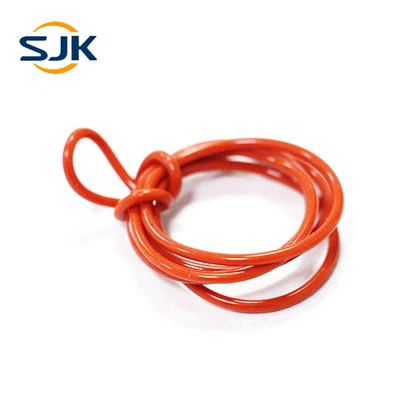
If you want more info on rubber compatibility, or the specs for our EPDM O rings, you know where to reach me. Don’t guess on this—better to ask than end up with a pile of failed O rings and a big mess to clean up. Catch you later!
Water Pump Gasket References
- Society of Automotive Engineers (SAE) J200: Standard Practice for Rubber Elastomers for Automotive Applications, 2021
- ASTM D2000: Standard Classification System for Rubber Products in Automotive Applications, 2020
- Rubber Chemistry and Technology, Vol. 87, No. 3: Compatibility of Synthetic Rubbers with Petroleum-Based Fluids, 2014
- Dupont Performance Elastomers: EPDM Elastomer Compatibility Guide, 2022
Zhejiang Jiacheng New Material Co., Ltd.
Zhejiang Jiacheng New Material Co., Ltd. is one of the most professional epdm o ring manufacturers and suppliers in China, specialized in providing high quality customized products. We warmly welcome you to buy or wholesale epdm o ring in stock here from our factory. Contact us for quotation and free sample.
Address: #64 Anjiang Road, Jianshan New Zone, Huangwan Town, Haining City, Jiaxing City, Zhejiang Province
E-mail: jcseal_zhu@126.com
WebSite: https://www.sjkseal.com/
