When it comes to the capabilities of the head – foot operated HF (High – Frequency) welding machine, one of the most frequently asked questions from our clients is about the maximum welding thickness it can handle. As a professional supplier of these state – of – the – art machines, I am excited to delve into this topic and provide you with in – depth insights. Head Foot Operated HF Welding Machine
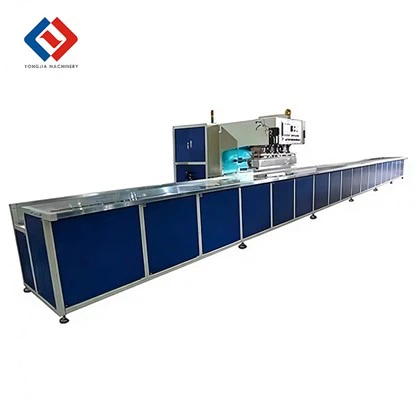
First and foremost, it’s essential to understand the principle behind high – frequency welding. High – frequency welding uses electromagnetic fields in the radio frequency range to generate heat, which then melts and fuses the materials together. This process is highly efficient and can achieve strong welds in a relatively short time. The head – foot operated design of our machines offers operators greater control and flexibility, allowing them to adjust the pressure and timing of the welding process according to the specific requirements of the job.
The maximum welding thickness of our head – foot operated HF welding machine is influenced by several factors. One of the primary factors is the power output of the machine. Higher power machines generally have the ability to weld thicker materials. Our advanced models are equipped with high – power generators, which give them a significant advantage when dealing with thicker workpieces.
Another crucial factor is the type of material being welded. Different materials have different melting points, electrical conductivities, and dielectric properties. For example, materials with high dielectric loss factors are more easily heated by high – frequency fields. Commonly welded materials such as PVC (Polyvinyl Chloride), PU (Polyurethane), and some synthetic fabrics can be welded with varying degrees of thickness depending on their characteristics.
In the case of PVC, which is one of the most widely used materials in HF welding applications, our head – foot operated HF welding machine can typically achieve a maximum welding thickness of up to 8mm. This is due to PVC’s relatively high dielectric loss factor, which allows it to absorb the high – frequency energy efficiently and heat up quickly. The strong molecular structure of PVC also helps in forming a reliable weld.
For PU materials, the maximum welding thickness is usually in the range of 6 – 7mm. PU has different physical and chemical properties compared to PVC, and although it can also be effectively welded using high – frequency technology, its slightly lower dielectric loss factor and different melting behavior limit the achievable thickness to a certain extent.
When it comes to synthetic fabrics, the maximum welding thickness can vary widely depending on the composition and density of the fabric. Some lightweight synthetic fabrics can be welded at relatively thin thicknesses, while heavier and denser fabrics may require more power and precise control of the welding process. In general, our machines can handle synthetic fabric welding thicknesses up to 5mm, but this can be adjusted based on the specific fabric type and the desired weld quality.
However, it’s important to note that achieving the maximum welding thickness doesn’t solely depend on the machine’s power and the material properties. The design of the welding electrodes and the pressure applied during the welding process also play significant roles. Our machines are equipped with specially designed electrodes that can distribute the high – frequency energy evenly across the welding area, ensuring a uniform and strong weld. The head – foot operation allows the operator to apply the appropriate pressure to the materials being welded. Too much pressure can cause the material to deform or squeeze out, while too little pressure may result in a weak or incomplete weld.
In addition to the above factors, the cooling system of the machine is also vital for welding thicker materials. As the welding process generates a significant amount of heat, especially when dealing with thick workpieces, an efficient cooling system is necessary to prevent overheating of the machine components and ensure stable operation. Our head – foot operated HF welding machines are equipped with advanced water – cooling systems that can effectively dissipate heat, allowing for continuous and reliable welding of thick materials.
We understand that different industries have different requirements for welding thickness. For example, in the automotive industry, where PVC and PU materials are often used for interior components such as seat covers and door panels, the ability to weld relatively thick materials is crucial for ensuring product durability. In the textile industry, the need to weld synthetic fabrics of various thicknesses is also common for manufacturing products like tents, awnings, and waterproof clothing.
Our company has been at the forefront of developing and supplying head – foot operated HF welding machines for many years. Our R & D team is constantly working on improving the machine’s performance, including its ability to handle thicker materials. We invest heavily in research and development to ensure that our machines meet the evolving needs of our customers in different industries.
We also offer comprehensive technical support and training services to our clients. Our experienced technicians can provide on – site installation, commissioning, and training to ensure that operators are fully familiar with the machine’s operation and can achieve the best welding results. Whether you are a small – scale manufacturer or a large – scale industrial enterprise, we can provide you with customized solutions based on your specific welding requirements.
If you are in the market for a head – foot operated HF welding machine and have questions about the maximum welding thickness or other aspects of the machine’s performance, we encourage you to contact us for a detailed discussion. Our sales team is always ready to provide you with professional advice and help you select the most suitable machine for your business.

In conclusion, the maximum welding thickness of our head – foot operated HF welding machine depends on multiple factors, including power output, material type, electrode design, pressure control, and cooling system. With our advanced technology and continuous innovation, we are confident that our machines can meet your diverse welding needs. Don’t hesitate to reach out to us for more information and to start a fruitful business partnership.
Urine Bagblood Bag Production Line References:
- Industrial Welding Handbook: High – Frequency Welding Techniques
- Journal of Material Joining and Welding: Research on High – Frequency Welding of Different Polymers
Dongguan Yongjia Machinery Equipment Co., Ltd.
We are one of the most reliable head foot operated hf welding machine manufacturers and suppliers in China, specialized in providing high quality customized service. Please feel free to wholesale advanced head foot operated hf welding machine at low price from our factory. For quotation, contact us now.
Address: No. 240, Chashan South Road, Chashan Town, Dongguan City, Guangdong Province, China
E-mail: info@yjwelding.com
WebSite: https://www.yjhighfrequencymachine.com/
